| |
WHK3 Web Sites |
|

Telephone Tile & Silo Tile
By Bill Kibbel
I've heard folks referring to structural terra cotta as "telephone tile" and occasionally "telegraph tile".
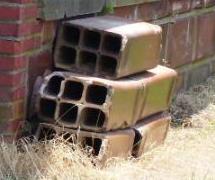
Telephone/telegraph tile was specifically manufactured for containing and protecting underground communication cables. It is quite similar to the hollow tile blocks used in building construction. |
 |
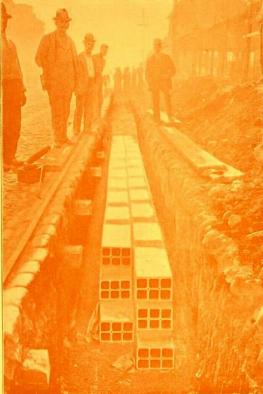 |
The interior of multi-duct terra cotta conduit is also divided into "cells" by a "web". The cells however were the ducts for the cable installations. Unlike the building blocks, the exterior shell is smooth, not ribbed for plaster and stucco applications. The corners are usually rounded and some have a bell joint at each end for joining to other blocks. Others have fine grooves at each, so that mortar applied to the joints will bond, to seal the joints between each unit. The shell is also usually vitrified, unlike the unglazed blocks manufactured for construction.
Although telephone tile is mistaken for an actual building material, and not manufactured or tested for use in building construction, it has more than occasionally been adapted successfully. |
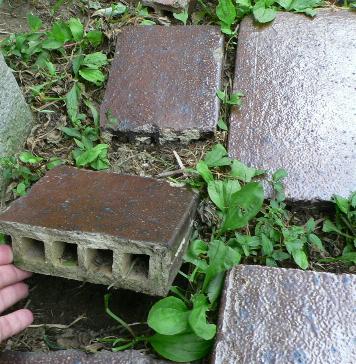
Silo Tile is also a hollow structural terra cotta product used for constructing round towers. The individual blocks are quite thin as compared to the other building tiles - usually 6 inches or less. The are also slightly curved.
They were a significant improvement over the wood stave silos, but there were concerns that silage wouldn't keep as well. This appears to be unfounded as stone silos had been in use since at least the 18th century. |
 |
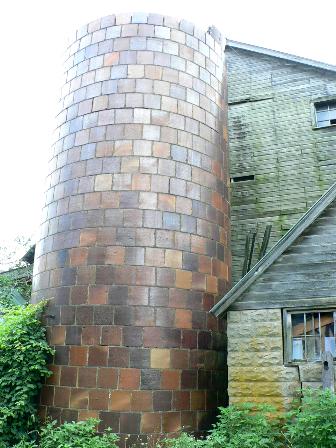 |
The hollow tiles used for silos were vitrified or glazed. This reduces the absorbtion of water, eliminating the need for a cement coating. Salt glaze was used for a period, which made the tiles even more impervious, but it resulted in a weaker structure.
There are many, many surviving tile silos that are quite well preserved and more pleasing to look at than steel or concrete silos. They are at least 75 to 80 years old as the mid 1930s was about the time that concrete silos had completely taken over. |
PREVIOUS: Structural Terra Cotta
Bill Kibbel, an expert in historic building materials and methods, is a consultant
and an inspector of historic & commercial buildings at Heritage Building Inspections.
�2004, Wm. Kibbel III
To contact our contributors you can email us however, we cannot answer specific questions or reply with any technical advice. |